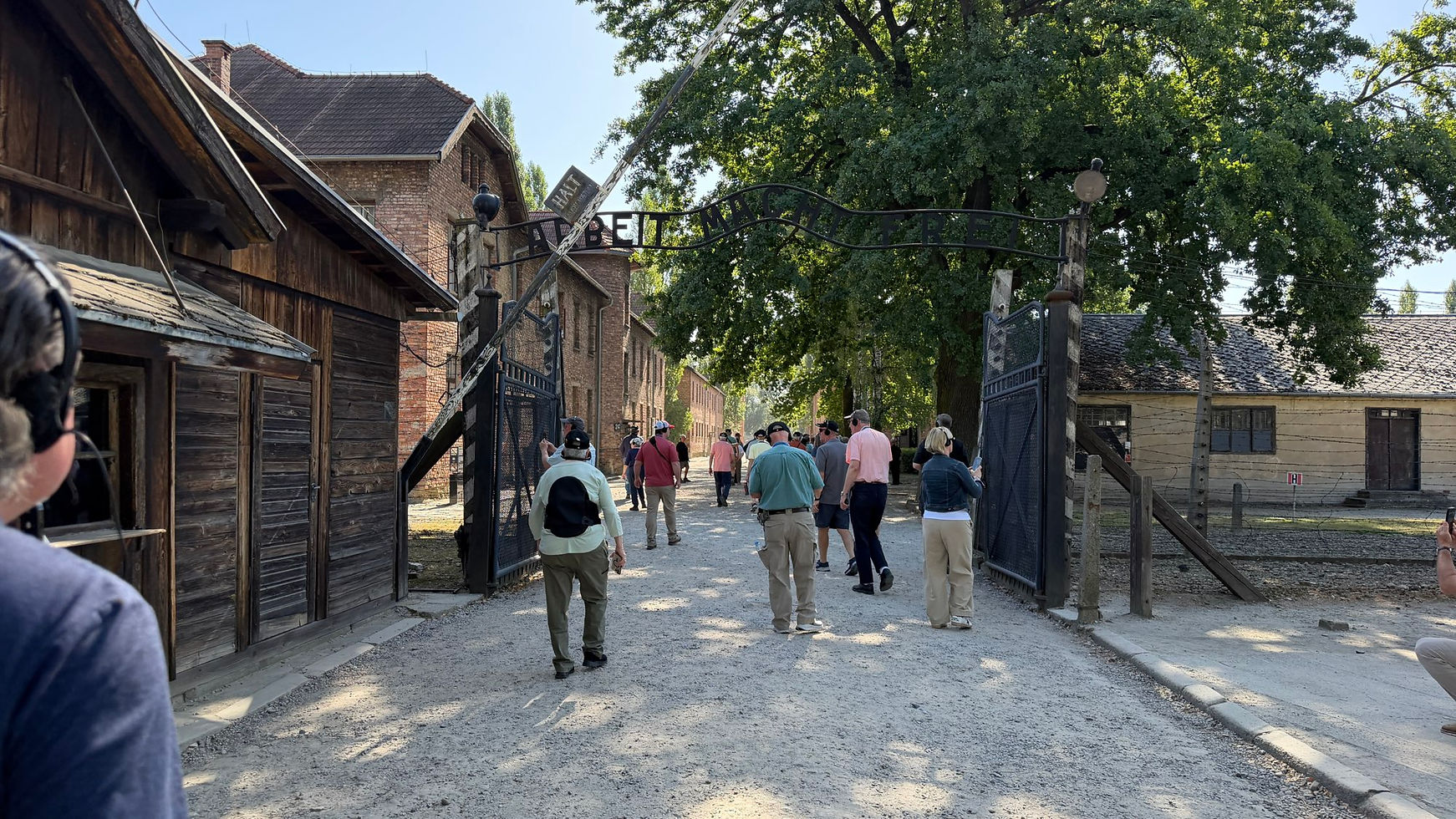
Living History in a Place of Death

Updated: 3 days ago
Walking from the visitor center at Auschwitz toward the camp, we passed through a tunnel where the names of people murdered at the complex were being recited. Hearing name after name immediately changed the atmosphere. These were not simply statistics from a history book. They were individuals whose lives ended here.
Auschwitz I was originally a Polish military barracks before Nazi Germany invaded Poland in 1939. In 1940, the Germans converted the site into a concentration camp, initially holding Polish political prisoners and others targeted by the Nazi regime. As the camp system expanded, nearby Auschwitz-Birkenau was constructed. Beginning in 1942, Auschwitz became a major center for the systematic murder of European Jews as part of the Nazi “Final Solution.”
Walking between the brick blocks of Auschwitz I, reminders of imprisonment and death are everywhere. Electrified fences surrounded the compound, and approaching prohibited areas could mean being shot by guards. r

Torture of the prisone was extensive. In one form of punishment, the prisoners feet were attached and they were laid flat on their stomach sat in a chair contraption and then flogged. If they passed out before all of the lashes were administered, they would wait for then to regain consciousness and start from the beginning.

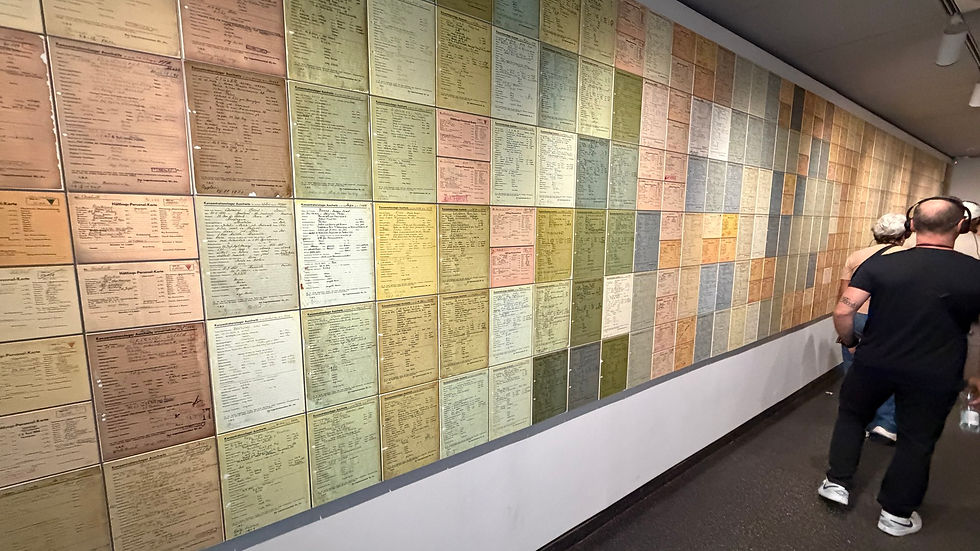
Inside the museum exhibits, the scale of dehumanization becomes increasingly difficult to comprehend. Prisoners were photographed and registered, their identities gradually replaced by numbers. Eventually the prisoners were tattooed with their bmnber.

At Auschwitz, many registered prisoners were extensively documented. Jews who were deported to the camp and sent directly to the gas chamber were never documented, as if they never existed.
Prisoners were stripped of virtually everything. Their hair was shaved. They wore crude uniforms and inadequate footwear, including wooden clogs.

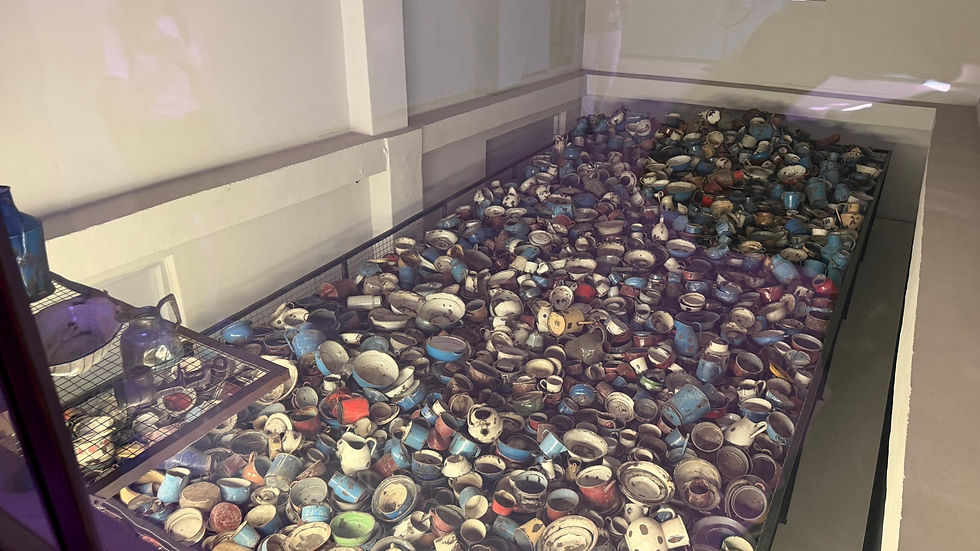
Even something as simple as a metal bowl could become essential for survival because without it, receiving food could become nearly impossible.
Hunger and cold were constant and deliberate. Prisoners were forced to perform exhausting labor while receiving grossly inadequate nutrition. Sanitation was severely restricted. Every aspect of daily existence was designed around control, humiliation and survival. Their clothing never changed. It was never meant to keep them warm in the winter

Some exhibits preserve prisoners’ artwork and testimony, allowing people who experienced Auschwitz to speak across generations. Those first-person accounts may be among the most powerful parts of the museum because they restore individuality to people the Nazis attempted to reduce to numbers.
Block 11 revealed another dimension of the terror. Known as the camp prison, it contained punishment cells, including standing cells and starvation cells. Nearby stands the execution wall, where thousands of prisoners were shot.

Other prisoners were subjected to brutal medical experiments. Nazi physicians, including Carl Clauberg, and Joseph Mengle conducted experiments on prisoners without consent, causing terrible suffering and death.
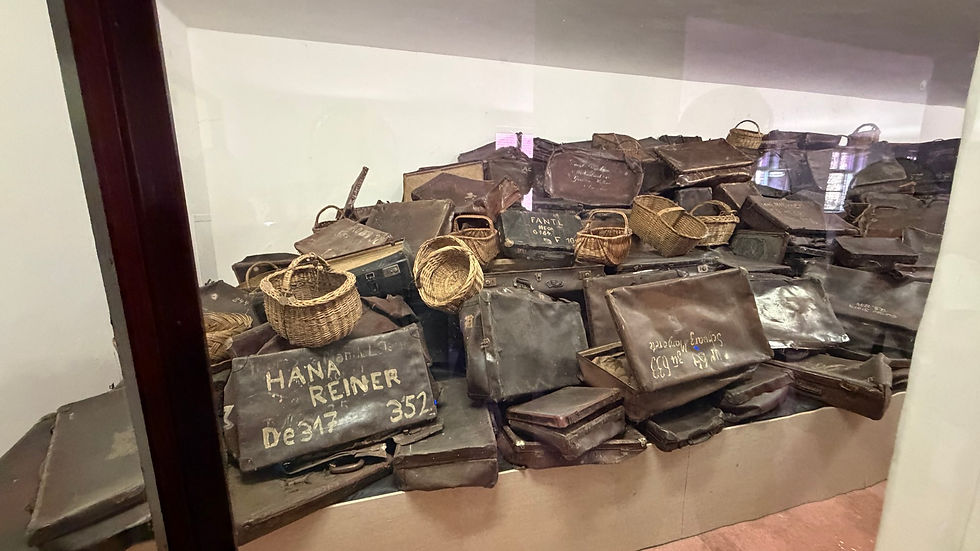
Perhaps the most overwhelming exhibits are those containing the possessions stolen from deportees.
People arrived carrying suitcases, pots, shoes, eyeglasses and religious objects. Many had been deliberately deceived into believing they were being relocated and would eventually begin new lives. They were instructed to label their luggage so it could supposedly be returned later. It was another lie intended to maintain order.
At Birkenau, arriving Jews underwent selection. Those considered capable of forced labor might temporarily survive. Many children, elderly people, pregnant women and others considered unable to work were sent directly to the gas chambers.
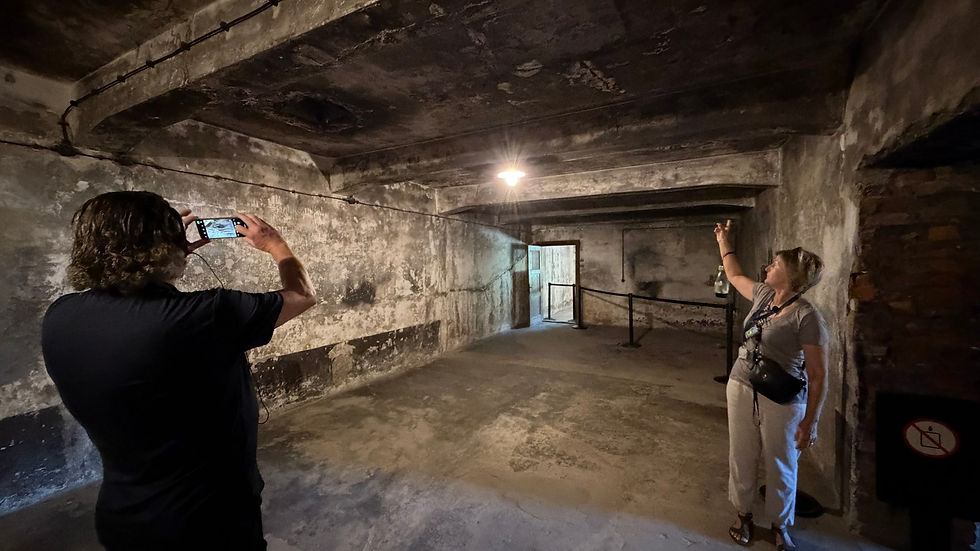
The Nazis used Zyklon B to murder people in gas chambers. The killing facilities at Birkenau were constructed to murder enormous numbers of people, followed by the cremation of their bodies. The creametorium was destroyed when the Nazis were fleeing and attempting to cover up their crimes.

Approximately 1.1 million people were murdered at Auschwitz, around one million of them Jews.
Standing here makes those numbers almost impossible to process.
One of the women’s Barack was sill sanding and provided a poignant reminder of how inhumane humans can be. he’s bunks would sleep 4-10 at a time. When there was no more rooms for them, they slept on the floor. These building had no running water, or toilets and were locked from the outside at night.

The hair from women were sold to companies in two to make a fabric which they sold as material to create clothes
The buildings remain. The fences remain. The execution wall remains. The prisoners’ belongings remain.
But what affected me most were the names.
I began this visit walking through a tunnel listening to them being spoken aloud. After seeing the barracks, photographs, bowls, shoes, suitcases and places where people were tortured and murdered, those names carried even greater meaning.
Auschwitz is not simply the story of millions.
It is the story of one person, followed by another person, followed by another—until the numbers become almost unimaginable.


Comments