Essential Money Tips for International Travel to Avoid Fees and Hassles

Traveling internationally can be exciting, but managing your money abroad often causes stress. You don’t want to carry a large amount of cash, yet relying on a single card can lead to problems. Knowing how to handle your credit and debit cards, cash, and currency exchange before and during your trip can save you from unnecessary fees and headaches. This guide offers practical advice to help you keep your money safe and accessible while traveling.
Check Your Credit Cards for Foreign Transaction Fees
Before you leave, review the credit cards you plan to bring. Many cards charge foreign transaction fees, typically around 3% of every purchase. While 3% might seem small, it quickly adds up on hotel bills, meals, tours, and shopping. For example, spending $1,000 on your trip could cost you an extra $30 just in fees.

Look for credit cards that do not charge foreign transaction fees. These cards are designed for travelers and can save you a significant amount of money. If you don’t have one, consider applying for a travel-friendly card well before your trip.
Inform Your Bank About Your Travel Plans
Some banks still require a travel notice to avoid blocking your card when they detect foreign transactions. Others have automated systems that track your location through their app or card usage patterns. Check your banking app or website to see if you need to notify them.
Setting a travel notice in advance prevents the frustration of having your card declined while trying to pay for a taxi or meal. It’s a simple step that can save you from scrambling for backup payment options in an unfamiliar place.
Use Credit Cards for Purchases, Debit Cards for Cash Withdrawals
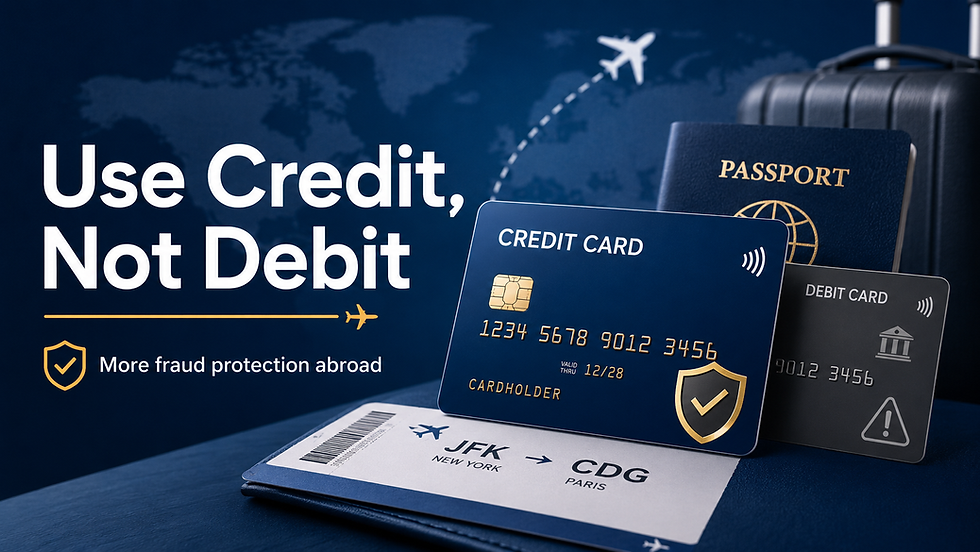
Credit cards generally offer better protection against fraud and disputes than debit cards. If a fraudulent charge appears on your credit card, you can dispute it without immediate impact on your bank account. Debit cards, on the other hand, draw directly from your checking account, which can be risky if your card is compromised.
Use your credit card for most purchases like hotels, restaurants, and tours. Reserve your debit card for ATM withdrawals when you need local cash. This approach limits your exposure and keeps your bank account safer.
Choose ATMs Carefully and Stay Alert
When withdrawing cash, use ATMs connected to reputable banks. Avoid standalone machines in souvenir shops, bars, or isolated areas, as these may charge high fees or be less secure.
Take precautions at the ATM:
Cover the keypad when entering your PIN
Be aware of your surroundings
Put your cash away before walking off
These steps reduce the risk of theft or card skimming.
Always Pay in Local Currency
When a card machine asks if you want to pay in U.S. dollars or the local currency, choose the local currency. Paying in U.S. dollars might seem easier, but it often comes with a poor exchange rate set by the merchant or payment processor. Let your credit card company handle the currency conversion for a better rate.
For example, if you buy a meal in euros but pay in dollars, the merchant’s conversion rate might add 5% or more in hidden fees. Selecting the local currency avoids this extra cost.
Use Contactless Payments but Carry Some Cash
Tap-to-pay options like Apple Pay or contactless credit cards are widely accepted in many countries. They offer convenience and speed, especially in busy urban areas.

Still, don’t assume every place accepts cards. Small markets, taxis, local cafes, public restrooms, and tipping often require cash. Carry a small amount of local currency for these situations to avoid inconvenience.
Should You Exchange Money Before You Go?
Exchanging a small amount of cash before your trip can be helpful, especially for expenses on arrival day like transportation or tips. However, avoid exchanging large sums at airports or currency exchange kiosks with poor rates.
Using ATMs abroad usually offers better exchange rates than currency exchange counters. Just remember to use bank-affiliated ATMs and watch for fees.


Comments