Mt Fuji, Forest Shrines, and Open-Air Art: A Day in Hakone

Mt Fuji revealed itself as we docked this morning, crisp, unmistakable, and almost surreal in its clarity. It is said the mountain is only visible about 20% of the time, so seeing it so sharply felt like a quiet omen for the day ahead, as if Japan itself was briefly lifting a veil to set the tone for what was to come.

After breakfast, we boarded the bus for the familiar 90-minute drive into the mountains toward Lake Ashi. These journeys have become a defining rhythm of the trip. Nearly every destination seems to require winding mountain roads, long stretches of forest, and carefully coordinated travel.
At first, the time on the bus felt like a necessity. Now it feels like part of the experience,an unhurried transition between places that allows the landscape to slowly unfold. The guide spends the time in transit providing information and stories along the way.
Our first stop was a shrine and temple complex tucked deep into the forest. A towering torii gate marked the beginning of the path upward toward the active
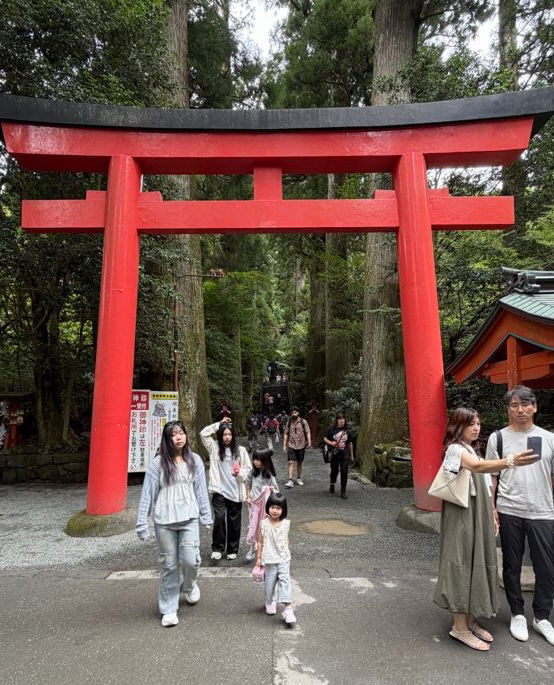
shrine, which is still in use today. The site also included a martial arts dojo, an unexpected detail that added a quiet sense of discipline and tradition to the surroundings. What surprised me most was learning that the shrine and temple are only about 140 years old. Yet, standing there among towering trees and drifting mist, it feels far older, like it has always belonged to the forest rather than been placed within it.

The atmosphere was still, almost reverent. Moss-covered stone, filtered light, and the sound of wind through the trees created a sense of timelessness that made it easy to forget how recently the structures were built. It is a reminder that age is not always measured in years, but in how deeply a place settles into its environment.

From there, we continued toward one of Hakone’s most photographed landmarks: the torii gate standing in or near Lake Ashi. When we arrived, nearly 100 people were already queued for the perfect shot. The line alone told its own story. of how travel today often includes shared moments of waiting for the same image. I didn’t have time to wait, but I still managed a few photos with people in frame. Even with the crowds, the scene remained striking: the red gate, the dark water, and the mountains rising behind it.
After another scenic drive, we arrived at the Hakone Open-Air Museum. I stopped at a small coffee truck near the middle and picked up a latte.

It wasn’t the coffee itself that stood out, but the setting, standing outdoors, surrounded by mountains and sculptures, made even a simple drink feel like part of the experience.
The museum is unlike any traditional gallery. Instead of walls and quiet corridors, there are open paths winding through gardens filled with more than 100 sculptures. Some pieces are elegant and

contemplative, others abstract or playful, and a few leave you genuinely unsure of what you are looking at.
That uncertainty is not a flaw, it is the point.
The space invites curiosity rather than explanation.
One highlight was the Picasso Pavilion, but my favorite moments came simply from walking the grounds.

Around every corner, another sculpture appeared framed by Hakone’s green mountains, creating a constant sense of discovery and movement.

This is what I love most about travel: the unexpected places that were never on the original list, yet end up becoming the most memorable parts of the journey.
If you are visiting Japan and want a break from crowded temples and busy cities, the Hakone Open-Air Museum is well worth adding to your itinerary.


Comments