
Amsterdam Canal Cruise: The Best Way to Experience the City

If you want to understand Amsterdam—not just see it, the canal cruise is the place to start. From the water, the city reveals itself in a way that walking or biking alone simply cannot match. The canals are not just scenic; they are the backbone of Amsterdam’s history, engineering, and daily life.
Amsterdam is often called the “Venice of the West,” and with nearly 1,200 canals, the comparison holds. What makes this even more impressive is that most of these waterways are man-made. Built during the Dutch Golden Age in the 1600s, the canal belt was a carefully engineered system designed to improve transportation, manage water, and support the city’s rapid growth. As your boat glides through these historic channels, you are quite literally traveling through a city built by design.

The homes lining the canals are among the most desirable, and expensive—real estate in the Netherlands. Tall, narrow, and full of character, these buildings often appear to lean slightly forward or sideways. Known as “dancing houses,”

their tilt is the result of centuries-old wooden foundations settling into the soft, marshy ground. Originally, many were intentionally built with a slight forward lean to make it easier to hoist goods into upper floors using pulley systems. Today, they stand as iconic symbols of Amsterdam’s architectural identity.
Life along the canals is not limited to traditional homes. Houseboats are a defining feature of the city, with nearly 3,000 floating residences occupying some of the most coveted “addresses” in Amsterdam. These floating homes highlight the city’s long-standing relationship with water, adapting to it rather than fighting against it.

While the canals dominate the landscape, the Amstel River is the city’s primary natural waterway. In fact, the name Amsterdam comes from “dam on the Amstel,” referencing the original dam built to control the river. Along this river sits the elegant InterContinental Amstel Amsterdam, one of the city’s most luxurious hotels and historically one of the first buildings in Amsterdam to have electricity. It remains a landmark of prestige, often hosting high-profile guests, including legends like The Rolling Stones.

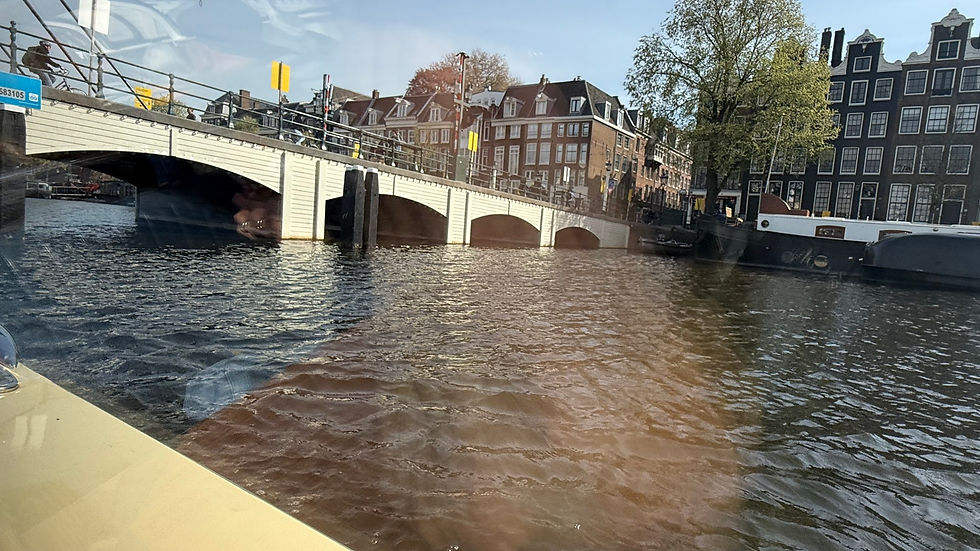
As your cruise continues, you’ll likely pass the famous Magere Brug, or “Skinny Bridge,” which spans the Amstel River. This elegant drawbridge is not only functional—still opening for passing boats—but also culturally significant, having appeared in films such as Diamonds Are Forever. Seeing it from the water offers a perspective that connects both past and present.
Amsterdam’s history is deeply tied to commerce and global trade. In the 1600s, it became home to the world’s first stock exchange, driven by the powerful Dutch East and West India Companies. This wealth helped shape the canal belt and the grand homes you see today. The city also became a center for the diamond trade, with Jewish communities playing a significant role in cutting and distributing diamonds after bringing the industry from Antwerp.

While World War II tragically diminished Amsterdam’s Jewish population, the cultural and historical imprint remains, visible in areas like the Jewish Quarter and its enduring landmarks.
Throughout your canal cruise, you’ll notice how integrated transportation is within the city. Boats, bikes, and pedestrians all share the space in a carefully balanced system. Biking, in particular, is a year-round way of life here, while driving is discouraged by extremely high parking costs—often reaching premium hourly rates even with permits.

Finally, keep an eye out for Amsterdam’s coat of arms, marked by three X’s. These symbols represent protection from the city’s historic threats: fire, plague, and water—forces that once posed constant danger to its residents.
A canal cruise is more than a sightseeing activity, it’s a masterclass in how geography, engineering, commerce, and culture come together to shape a city. In Amsterdam, the water doesn’t just surround the story, it is the story.


Comments