Bakeries in France: Where Every Crumb Tells a Story

There are many good reasons to visit France: historic castles, world-famous museums, charming villages, and landscapes that seem designed for postcards. But one of the best reasons? It's probably waiting just around the corner from your hotel right now, filling the morning air with an aroma so intoxicating—warm bread, melted butter, caramelized sugar fills the air all around the neighborhood.

The neighborhood bakery, or boulangerie, isn't just essential to daily life in France. It's the heartbeat of it. This isn't a place where you grab breakfast and run. This is where the baker knows his regulars by name, where the day genuinely begins with something pulled from the oven minutes ago. For travelers, stepping inside is like being handed a key to understanding French culture, one that happens to taste incredible.

The first thing that hits you is the bread. By law and tradition, a true French boulangerie makes everything on the premises, and you can tell. The classic baguette looks deceptively simple, but I've learned that creating the perfect one is an art form. A good baguette has a crust so crisp it crackles audibly when you break it—that sound alone makes my mouth water—and inside, the crumb is soft, airy, almost cloud-like. The French eat it fresh, ideally while walking down the street and tearing off pieces. I'll confess: I've never once made it back to my hotel with an intact loaf. Not once.
Then there are the croissants. Listen, a proper French croissant should be light, flaky,

impossibly buttery, and yes, slightly messy. Those tiny golden flakes will scatter across your shirt, your table, the sidewalk. That's not a flaw—that's proof you're eating the real thing. You'll also find pain au chocolat, where layers of buttery pastry wrap around bars of dark chocolate that stay just slightly melted, and pain aux raisins, those gorgeous spirals filled with raisins and vanilla-scented pastry cream that I've been known to eat for lunch.
French bakeries often blur the line between boulangerie and pâtisserie—one focuses on bread, the other on pastries and desserts, but many shops do both. The result? Display cases that look like edible jewelry boxes: glossy fruit tarts, chocolate éclairs with mirror-smooth glaze, cream-filled mille-feuille, pastel macarons, and cakes so beautiful I've actually hesitated before ordering. Only hesitated, though.
Regional specialties make exploring French bakeries endlessly rewarding. In Brittany, I discovered kouign-amann, a pastry so rich with butter and caramelized sugar that it's basically delicious heart disease. Bordeaux gave me canelé, those small ridged pastries with dark, almost burnt exteriors hiding soft custard centers. In Provence, I found fougasse, a flatbread studded with herbs and olives that tasted like sunshine. Each region adds its own story to the bakery counter.
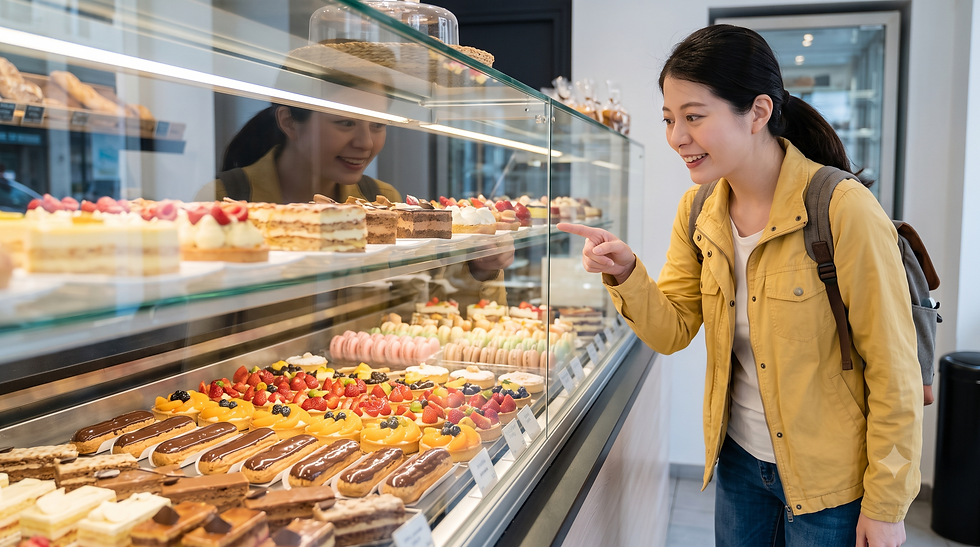
Ordering is surprisingly simple. Start with "Bonjour"—greetings genuinely matter here. Pointing works perfectly when your pronunciation fails (mine certainly does), though attempting French always earns smiles. "Une baguette, s'il vous plaît" will get you a baguette. "Un croissant" might become the most useful phrase of your trip.
Bring cash, especially in smaller towns, and know that bakeries often close for afternoon breaks or certain weekdays. Arriving early means better selection and watching the neighborhood's morning rhythm unfold around you.
French bakeries aren't merely places to buy food. They're about craftsmanship, community,

and remembering to slow down long enough to savor something made with care.
and remembering to slow down long enough to savor something made with care. Whether you're carrying a baguette through Paris, sampling pastries in Lyon, or finding a tiny village bakery in Provence, every visit offers another genuine taste of France.
And honestly? The crumbs on your shirt make the best travel souvenirs.


Comments