Vienna's Bakery History

Experience Vienna's famous coffee house culture and dive into a world of aromatic coffee and fluffy Viennese pastries. UNESCO has awarded Vienna's coffee house culture the status of "Intangible Cultural Heritage", because it offers much more than just drinking coffee. It's a feeling. It's an experience all around amazing desserts.
Coffee house pastries began to be developed after coffee houses first appeared in Vienna in the 17th century, soon after the Ottoman siege of Vienna in 1683. According to popular folklore, the croissant was invented in Vienna, and was made in that shape to resemble and mock the crescent moon used as a symbol of the Ottoman Empire. As coffee houses spread throughout the growing Habsburg Empire, bakers competed to supply the richest pastry treats to complement the Viennese's coffeehouse staples. By the 1800s coffeehouse culture was established throughout Vienna, Kaffeehäuser became popular meeting places for artists, politicians, and thinkers - who usually kept their table ringed with plates of sweet treats atop marble tables.

In later centuries Viennese baked goods evolved from humble sweet rolls to amazing arrays of puff pastries glazed with chocolate or filled with creams and pastry fillings. Initially available at coffee houses were simply prepared buttery crescent rolls called Kipferl. As the availability of sugar increased in the 1700s pastries became more decadent. Then in the 1800s Franz Sacher created the Sachertorte in 1832, which is still considered Vienna's most famous cake today. It is a rich, dense chocolate cake layered with apricot jam and covered in a dark chocolate glaze. Today coffee houses offer strudels, cream puffs and multi-layer cakes.
If you visit a Viennese coffee house today, the first thing you notice is the glass display case

filled with perfectly baked goods. There's the strudel with its super thin, flaky layers of pastry filled with cinnamon spiced apples, raisins, and toasted breadcrumbs. The ethereally light Kardinalschnitte, a slice of angel food cake and sponge cake layered with whipped cream. And the rich, decadent Esterhazytorte: layers and layers of walnut cake frosted with a swirl of chocolate and finished with that signature white fondant adornment. Coffeehouse pastries like the Linzer Torte, which some say is the oldest known recipe for cake in existence dating back to 16 53, are a crumbly almond pastry filled with blackcurrant jam.

Viennese coffee houses are holding strong as an island of handmade pastries in a sea of fast food. Top Viennese coffee houses such as Café Central, Café Landtmann, and even Demel Bakery have master pastry chefs who have apprenticed in the fine art of Viennese pastries. Pastry chefs still pull their strudel by hand until it's thin enough to read newspapers through. Recipes are often passed down through generations, or locked away in safe-deposit boxes at old-world locations.
Vienna knows its pastries. Here, they aren't just an afterthought, they're part of everyday life. Breaking off a piece of Sachertorte to enjoy with your Melange coffee is not just delicious, it's a form of communion. Over the years, Vienna's coffee house culture has had patrons that range from royalty to artists and poets. One thing that has always remained the same is that the desserts found in these establishments help level the playing field and allow everyone to indulge. These days, many visitors travel to Vienna expressly to indulge in these famous desserts.
Travelers seeking one of the world's greatest (and tastiest) cultural experiences should
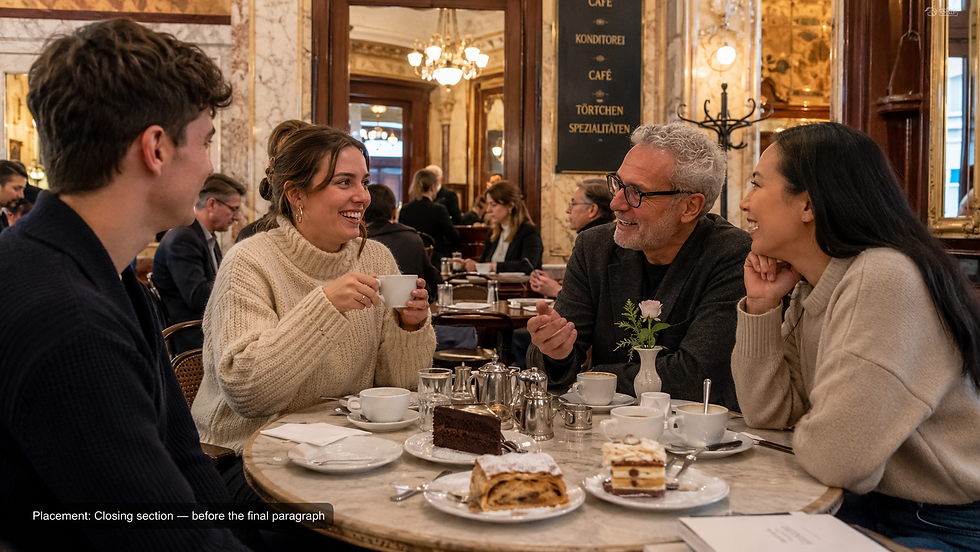
spend some time in Vienna's coffee houses. Every bite of every pastry, from the famous Sachertorte to the light and airy Apfelstrudel, is filled with history, tradition and incomparable artistry. If you consider yourself a foodie or just someone who likes to try new things, sitting down at a Vienna Kaffeehaus and indulging in one of these amazing desserts is a must-do. In Vienna, they don't just satisfy your appetite, they satisfy your soul.


Comments