Athens After Dark: A Cultural Dinner, Greek Dancing, and the Power of Connection

One of the things I’ve come to appreciate about traveling with Globus is how intentionally they design experiences to bring people together. On many of their tours, the first evening includes a group dinner at a local venue—something more than just a meal. It’s meant to be a cultural introduction and, just as importantly, a way to turn a group of strangers into a community.
On this current trip through Greece, that tradition came to life in Athens with a dinner and show that delivered exactly what you would hope for: music, dancing, food, and a room full of energy.
I’ll admit—on previous trips, I’ve skipped that first-night dinner. Each time, I found myself playing catch-up socially for the rest of the journey. There’s something about that initial gathering that serves as a true icebreaker. This time, I made sure to attend, and it reinforced what I had learned the hard way: that first night matters.
Bringing together 20-25 travelers, all with different backgrounds, personalities, and expectations, is no small task. Even the best tour director relies on moments like this to help build connections early. Shared experiences—especially ones that are fun, a little loud, and culturally immersive—create the foundation for the rest of the trip.
The evening began with live Greek music filling the room, setting the tone immediately. Glasses of red and white wine were poured, and of course, there was ouzo—the traditional Greek spirit. If you’ve never tried it, ouzo has a strong black licorice flavor and is typically mixed with water and ice, turning it a cloudy white. It’s as much a part of the experience as the food itself.

What many people call “Greek belly dancing” is not originally Greek. The style most often seen in Greece today is called tsifteteli (τσιφτετέλι)—a dance strongly influenced by Middle Eastern and Ottoman traditions.
True “belly dance” originates from regions like Egypt and Turkey
Greece adopted and adapted similar movements into its own cultural context

Speaking of food, I’ll be honest—it wasn’t my favorite part of the evening. Greek cuisine is beloved by many, but not every dish hits the mark for every traveler. That said, the meal wasn’t really the highlight. What stood out was the atmosphere and the opportunity to connect with others at the table. Conversations flowed easily, stories were shared, and laughter came naturally.
Throughout the night, traditional Greek dancers took the stage, performing with precision and passion. Their routines told stories through movement, and the energy in the room continued to build. Between sets, a talented female singer entertained the crowd with a mix of Greek and familiar American songs, eventually inviting guests up to join in. And yes—many people did.
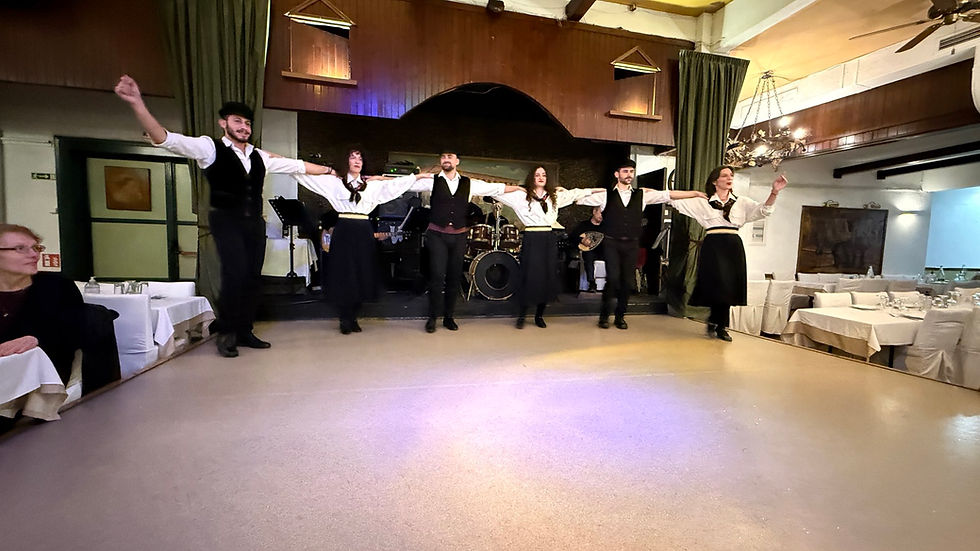
As the evening progressed, the celebration reached its peak with one of the most iconic elements of Greek festivities: plate breaking. While it’s not as common in everyday Greek life as people might think, it still appears in performances like this. The act isn’t really about destruction—it’s about expression. It represents joy so powerful that it becomes physical.
When the shouts of “OPA!” echoed through the room, it wasn’t just a word—it was a feeling. A shared moment of energy, celebration, and living fully in the present.

By the end of the night, people who had only met hours earlier were dancing together, exchanging stories, and forming connections that will likely carry through the rest of the trip. As we left the venue, there was a clear sense that something important had happened—not just a dinner, but the beginning of a shared journey.
Fun was had by all, and more importantly, new friendships were formed.


Comments